
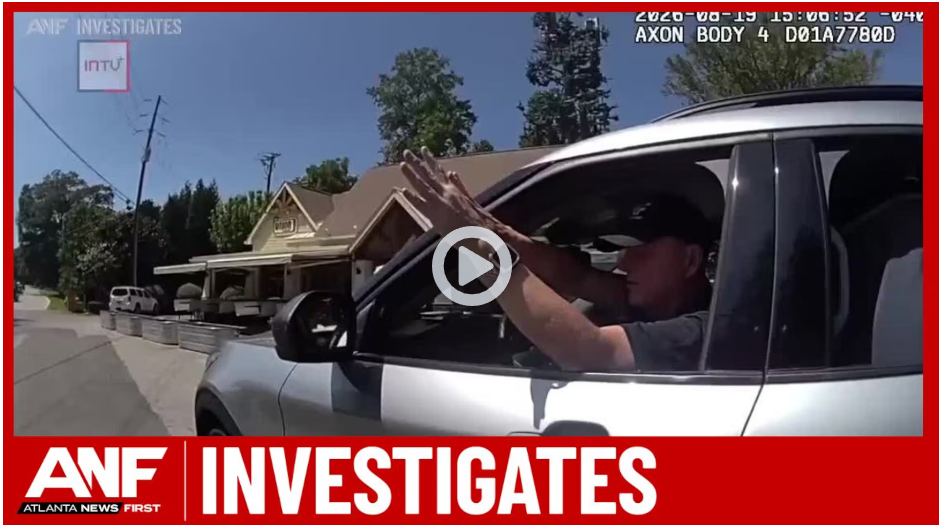
MILTON, Ga. The Milton Police Department is defending its decision to stop and temporarily detain investigative journalist Brendan Keefe of Atlanta News First and InvestigateTV after a Flock Safety worker called 911 while Keefe was documenting the installation of one of the company's surveillance cameras.
Keefe, Chief Investigator for Atlanta News First and InvestigateTV, first reported the encounter and published video documenting the incident.
In describing what happened, Keefe wrote on X:
"You can't opt out of Flock following you or recording photos & video of you or your car. But Flock can opt out of us recording them in public by calling one of their customers: the police. I was stopped by three officers after a Flock installer called 911."
The Georgia Dossier subsequently contacted the City of Milton seeking an official explanation of the stop, the officer's comments during the encounter and the department's position regarding journalists recording people working in public.
In a written response to the Georgia Dossier, the Milton Police Department said it reviewed the August 19 encounter and concluded that the officer involved acted consistently with department policy and training.
Flock worker calls 911
According to Keefe's reporting for Atlanta News First and InvestigateTV, he was documenting a Flock Safety technician installing a camera along a public roadway.
Keefe reported that he parked at a distance, wore a yellow safety vest and Atlanta News First hat, displayed a press placard in his vehicle and recorded the installation from a public location.
The Flock technician eventually packed up his equipment and drove away. Keefe followed several vehicles behind while attempting to document the technician's next installation.
The Flock worker called 911.
During the call, the technician told the dispatcher that he worked for Flock Safety and said he was being followed and harassed.
After Keefe entered Milton, a Milton Police officer stopped his vehicle. Three police units ultimately responded.
Keefe identified himself as an investigative journalist and explained that he was documenting Flock Safety camera installations.
Body camera footage obtained and published by Keefe and Atlanta News First shows the responding officer later discussing the situation with a supervisor and indicating that Keefe had been following the worker but did not appear to be driving close enough to constitute a traffic violation or behaving in a manner that appeared to rise to stalking.
Keefe was allowed to leave after approximately 17 minutes. He was not charged with a crime.
Officer's comment draws attention
One statement captured during the encounter became a central question surrounding the stop.
While discussing the Flock worker's concern about being photographed and potentially appearing in a news report, the Milton officer told Keefe:
"I know, media, you know, the First Amendment and all of that. But also, we should probably be a little more careful on who we put on TV and stuff like that."
The Georgia Dossier asked Milton Police whether the department believes a law enforcement officer has any role in advising or discouraging journalists from photographing, recording or publishing images of individuals working in public.
The department responded:
"No. The Milton Police do not discourage journalists from doing their valuable job. We respect the First Amendment and the right of journalists to film."
The Georgia Dossier also asked what the officer meant when she suggested the media should be "more careful on who we put on TV."
Milton Police said the officer was responding to a 911 call from an individual who said he was being followed and harassed.
The department said officers initially did not know the seriousness of the situation or that the individual following the worker was a journalist.
"After finding out what the journalist was doing, the officer acknowledged the rights of a journalist to film in public like anyone else," the department said.
According to Milton Police, the officer's comment was intended as a warning concerning Keefe's personal safety because an individual who believes he is being followed could potentially react unpredictably.
The department said its official position remains that journalists have the right to film in public locations.
What was the legal basis for the stop?
The Georgia Dossier asked Milton Police to identify the specific legal basis for stopping and detaining Keefe after the officer reportedly indicated to a supervisor that his conduct did not appear to constitute stalking or another violation of law.
The department pointed to the Flock worker's 911 call.
"The legal basis for stopping Mr. Keefe was a 911 call from the service worker" who believed he was in danger and was fearful about continuing his work, the department said.
Milton Police said Keefe was released shortly after officers determined that his conduct was "legal, reasonable, and not threatening to the service worker."
The department's written response did not identify a specific criminal offense that officers suspected Keefe of committing. Instead, it cited the 911 complaint and the worker's stated fear as the basis for investigating the situation.
Milton says officer followed policy
The Georgia Dossier also asked whether Milton Police reviewed the officer's actions and statements following the encounter.
The department said it had.
"Yes. The Milton Police have reviewed the officer's conduct during this encounter and believe it was consistent with the department's policies and training."
Milton Police identified the officer as Officer Smith, assigned to the Uniform Patrol Division.
The Georgia Dossier also asked whether Flock Safety, its employees, contractors or representatives had ever provided Milton Police with instructions, requests or guidance concerning members of the public or press photographing Flock employees, cameras or camera installations.
Milton Police said no.
"Our Department has not received any such requests or heard of any such concerns," the department said.
Questions extend beyond one traffic stop
Flock Safety has maintained that its employees and contractors may contact law enforcement when they believe they are being threatened, harassed or followed.
The company has also said it does not prohibit members of the public or journalists from photographing its cameras or employees working in public.
That creates an unusual dynamic in the Milton incident.
Flock Safety operates a network of automated license plate reader cameras designed to photograph vehicles traveling on public roads. The technology has become part of a growing national debate over privacy, government surveillance and the collection and sharing of vehicle location data.
In Milton, however, it was an investigative journalist pointing a camera toward someone involved in installing that surveillance infrastructure who became the subject of a police response.
Milton Police says it respects Keefe's First Amendment rights.
The department says the officer acted within policy.
And officers ultimately concluded that Keefe's actions were legal and did not present a threat to the Flock worker.
The encounter therefore raises a broader question as communities across Georgia continue debating the expansion of automated surveillance technology:
How should law enforcement respond when someone installing surveillance cameras in public calls police because a journalist is documenting them?
Source reporting and video: Brendan Keefe, Chief Investigator, Atlanta News First and InvestigateTV.